

On this page ▾
Key takeaways
- George Pig has moderate hearing loss in one ear, and children with hearing aids can see themselves on screen.
- Daddy Pig ran the 2026 London Marathon for the National Deaf Children’s Society, aiming to raise £54,000.
- Over 50,000 children in the UK are deaf or have hearing loss, and it can go unnoticed.
- Watch for a child asking for repeats, turning the television up or not answering from another room.
- If something does not feel right with your child’s hearing, a hearing assessment is a simple next step.
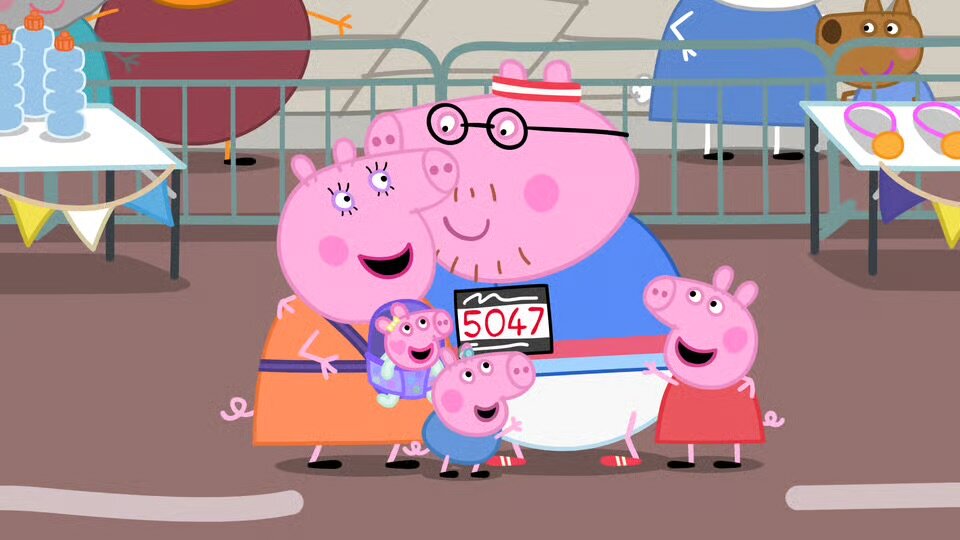
In a recent Peppa Pig episode, George Pig is shown to have moderate hearing loss in one ear, and Daddy Pig then ran the 2026 TCS London Marathon for the National Deaf Children’s Society (NDCS), aiming to raise £54,000: one pound for each of the 54,000 deaf children in the UK1.
When a cartoon pig in a running vest takes on 26.2 miles through the streets of London, it tends to raise a smile. But behind the oinks and the fancy dress, the marathon carried a message that reaches well beyond the finish line: hearing loss is part of many children’s lives, and families do not have to face it alone.
Is George Pig deaf?
Peppa Pig’s brother George has moderate hearing loss in one ear, a storyline that reflects the real experience of many families across the UK. Watching a favourite character use a hearing aid and get on with life can be a powerful example for any child who wears one. In April 2026, Daddy Pig took this further by running the TCS London Marathon for the NDCS, with a fundraising target of £54,000, one pound for every deaf child in the UK1. More than fifty other runners joined him on the day, including real-life dads Jack, Phil and Martin, who know first-hand what it means to raise a deaf child.
Who were the dads behind Daddy Pig?
Jack ran for his own son, George1, who was identified as having sensorineural hearing loss at three weeks old, after which the family turned to the NDCS for information and support.
Phil’s son Oscar was diagnosed as profoundly deaf at two and a half before being fitted with hearing aids. He has since had cochlear implant surgery. Now five, Phil believes Oscar is “living life to the max”. The NDCS helped the family begin their BSL journey and guided them through the Education, Health and Care plan process before Oscar started school2.
Then there is Martin, whose daughter Audrey has moderate-to-severe hearing loss and wears purple hearing aids with pink, glittery moulds. Audrey did not pass her newborn hearing test, and what followed was a journey of testing, scanning and specialist appointments. The NDCS helped the family through it, including online BSL family sign courses that have helped Audrey express herself. For Martin, running a marathon for the first time was not about fitness or finish times; it was about showing up for his daughter the way the NDCS had shown up for his family3.
These are not extraordinary people doing extraordinary things. They are ordinary dads, showing up for their children.
Why does representation matter?
There is something quietly profound about a child with hearing aids watching George Pig get his first hearing aid on screen and thinking: he’s like me! Representation in children’s media is more than feel-good content. It shapes how children with hearing loss see themselves, how their hearing peers understand difference, and how families feel about seeking help.
Adding a deaf character to Peppa Pig’s diverse cast sends a clear signal: hearing loss is not something to hide. It is part of life for many children and, with the right support, it needn’t hold them back. Stigma around hearing aids remains a genuine barrier for older children and teenagers, who are acutely sensitive to being seen as different. The more normal hearing technology becomes, the more confidently young people can wear their aids, which can affect their development and wellbeing. We look at the same issue for adults in our article on hearing aid stigma.
Why do early hearing tests matter for children?
Over 50,000 children in the UK are deaf or have hearing loss, according to RNID4, and it is not always picked up early. The NHS newborn hearing screening programme, which aims to find permanent moderate, severe and profound deafness in newborn babies, is a vital first step5, but hearing loss can develop gradually, long after that first check. Glue ear alone, a very common build-up of fluid in the middle ear, can quietly affect a child’s speech and learning without them ever complaining. Our guides to glue ear and development and to spotting early signs of hearing loss in children explain what to look for.
Signs worth noticing include seeming inattentive, often asking for things to be repeated, turning the television up, or not responding when called from another room. If any of these ring a bell, a hearing assessment is a straightforward next step, not a cause for alarm. Think of it like a routine eye test: unremarkable, sensible and genuinely useful.
James Leare, Clinical Audiologist at Hearology, says: “What this campaign does so beautifully is reach families at the moment they need it most, before concerns become problems and before children fall behind. The stories of Jack, Phil and Martin remind us that no family should have to navigate a hearing loss diagnosis alone. At Hearology, we see every day the difference that early identification and the right support can make. If something doesn’t feel quite right with your child’s hearing, please don’t wait.”
How did the marathon go?
Daddy Pig finished in 5 hours 51 minutes, in full costume for all 26.2 miles, one second ahead of Joe Wicks6. It was joyful, daft and, for the families of children like Oscar, Audrey and George, truly valuable. Sometimes a serious conversation starts with a smile, and a slightly out-of-breath cartoon pig crossing the finish line.
If you have any concerns about your child’s hearing, or your own, a good first step is to talk to someone who can help.

Frequently asked questions
Is George from Peppa Pig deaf?
Why does George Pig have a hearing aid?
How many children in the UK have hearing loss?
What are the signs of hearing loss in a child?
What should you do if you are worried about your child’s hearing?
References:
- [1] National Deaf Children's Society, "Daddy Pig is running the TCS London Marathon," NDCS. Accessed: Nov. 16, 2026. [Online]. Available:
- [2] National Deaf Children's Society, "The dads behind Daddy Pig: meet Phil," NDCS. Accessed: Nov. 16, 2026. [Online]. Available:
- [3] National Deaf Children's Society, "The dads behind Daddy Pig: meet Martin," NDCS. Accessed: Nov. 16, 2026. [Online]. Available:
- [4] RNID, "Treating and preventing hearing loss in children," RNID. Accessed: Nov. 16, 2026. [Online]. Available:
- [5] UK Health Security Agency, "Newborn hearing screening programme (NHSP): overview," GOV.UK. Accessed: Nov. 16, 2026. [Online]. Available:
- [6] London Marathon Events, "Celebrity flash quotes," TCS London Marathon 2026. Accessed: Nov. 16, 2026. [Online]. Available: