
On this page ▾
Key takeaways
- Audiologists told the BBC they are seeing more young people with normal hearing tests who struggle to follow speech.
- No study has yet shown that noise-cancelling headphones cause auditory processing disorder.
- APD is not a hearing loss: people usually have normal hearing but find speech hard to understand, especially in noise.
- Vary your listening, take breaks and keep the volume comfortable, as the NHS advises.
- See a GP if you or your child find it hard to understand speech.
Noise-cancelling headphones may be affecting how some young people process sound, but the evidence is early. Audiologists told the BBC that more young people are being referred with hearing difficulties despite normal hearing tests, a pattern linked to auditory processing disorder (APD), and no study has yet shown that headphones cause it1,2.
If you or your child wear headphones a lot, this is a reason to vary your listening, not a reason to panic.
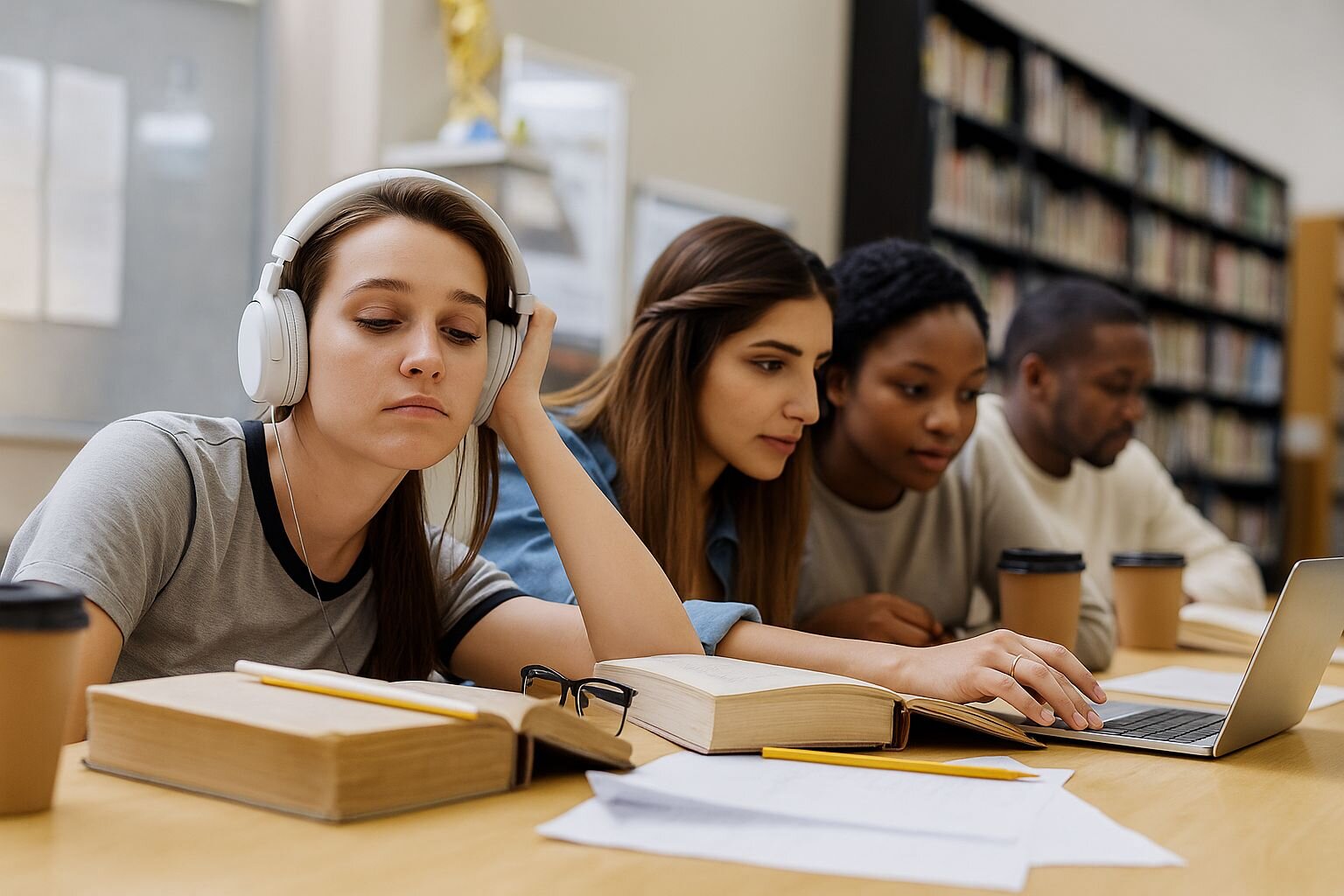
Noise-cancelling headphones have become one of the defining accessories of modern life, a sanctuary in our increasingly loud and chaotic world. From commuters on packed trains to students trying to focus in libraries or cafés, millions now rely on these devices to filter out the constant hum of modern life and dial in to whatever they choose to hear.
But while the technology has undeniable benefits, a growing number of audiologists are beginning to ask whether overuse of noise-cancelling headphones could be interfering with the brain’s natural development, especially in teenagers and young adults.
The concern centres on a rise in referrals of young people for hearing issues, where the ear itself is fine but the brain seems to struggle to process sound. The condition, known as auditory processing disorder (APD), is not a hearing problem: people with APD usually have normal hearing but find it hard to understand speech, especially in noise2. And it appears to be affecting more people who fall outside traditional risk categories.
What does it look like in real life?
One such case is Sophie, a 25-year-old administration assistant from London. She told the BBC that she regularly wore her noise-cancelling headphones for up to five hours a day and began experiencing symptoms of APD while at university. The cause of her APD is not known.
“All the words sounded like gibberish when I was in the actual lecture and I was trying to hear,” she said. Her hearing test came back normal, but further assessment by a private audiologist led to an APD diagnosis.
APD has historically been linked to brain injuries, middle-ear infections or neurodivergence, and the NHS says the cause is often unclear2. Audiologists are now seeing patients like Sophie who do not fit those categories, which has prompted calls for research into whether prolonged use of noise-cancelling headphones plays a part.
Could a “false” sound world affect listening?
Claire Benton, vice-president of the British Academy of Audiology, told the BBC that constantly shutting out real-world noise may reduce the brain’s ability to filter important sounds, something it only fully learns to do in the late teens.
“You have almost created this false environment by wearing those headphones of only listening to what you want to listen to. You are not having to work at it,” she said.
Renée Almeida, clinical lead for adult audiology at Imperial College Healthcare, made a similar point. “There is a difference between hearing and listening,” she said. “We can see that listening skills are suffering.”
The BBC reported that five NHS audiology departments have seen more young people referred with hearing difficulties whose standard hearing tests showed no problems with the ears themselves.
Why does sound variety matter?
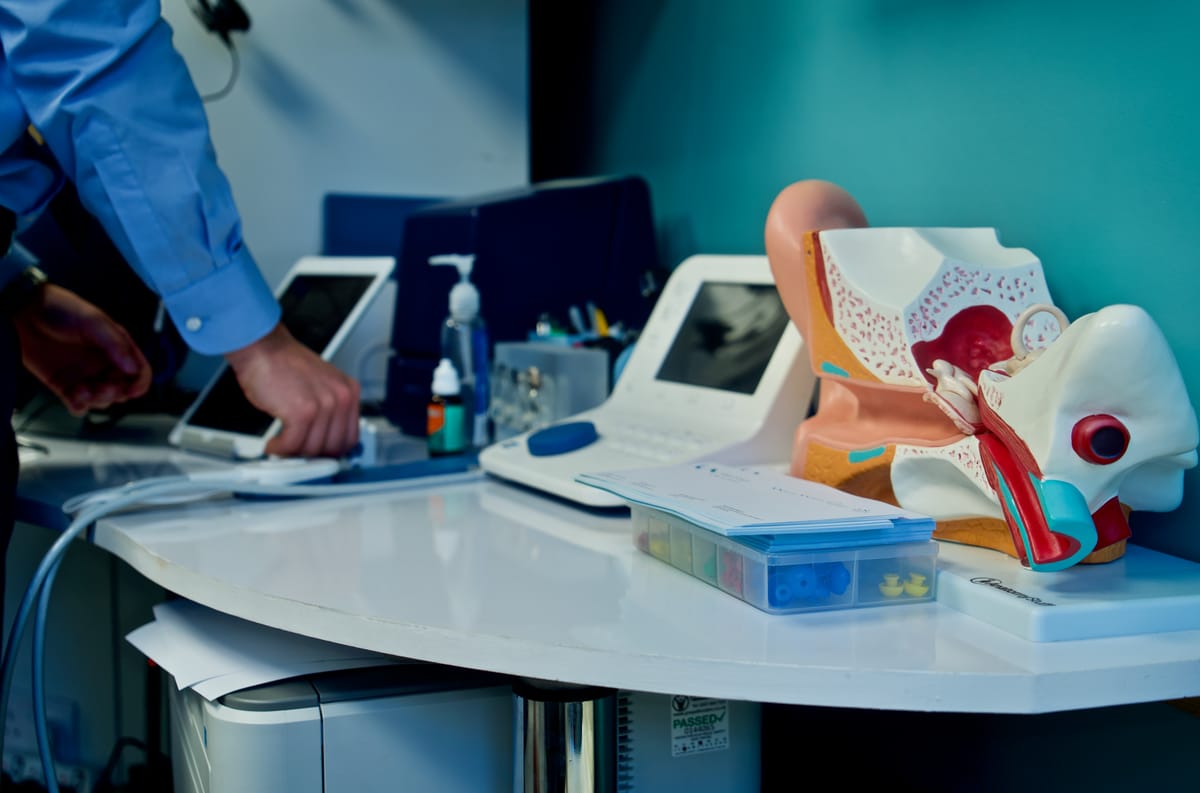
Hearology offers hearing tests, tinnitus support and microsuction ear wax removal, and our audiologists see the questions this raises.
“There is limited evidence on the extent to which noise-cancelling headphones and earphones protect our hearing. While noise-cancelling reduces the perception of external noise, it may not fully eliminate the risk of hearing damage from dangerously high noise levels” said Micaela Stonestreet, a Clinical Audiologist who works at Hearology. “It is important to protect your ears from dangerous noise, but we should be careful not to completely tune out everyday sounds. Our brains are wired to interact with sound, not just escape it.”
Micaela recommends that users of noise-cancelling headphones take regular breaks and use transparency modes to allow natural sound in, especially in safe environments where situational awareness is important. “Our brains need auditory stimulation in order to build the complex skills that allow us to filter noise, locate danger and stay connected socially,” said Stonestreet.
Where can you get help?
Despite rising awareness, access to treatment remains patchy. Access to APD assessment varies, and adults can find it harder to get than children. The NHS says testing is not usually done for children under 72. See a GP if you or your child find it hard to understand speech; they may refer you to a hearing specialist2.
There is no cure for APD, but auditory training can improve listening and concentration, and school pupils may use a wireless earpiece linked to the teacher’s microphone2. Adults outside education are often left to seek help privately. If something does not feel right when you listen, a hearing test is a sensible first step.
What should you do for now?
Researchers say it’s still too early to draw firm conclusions. Wayne Wilson, associate professor at the University of Queensland, told the BBC that studying the effects of noise-cancellation is challenging because of the number of variables: the type of headphones, duration of use, age of the user, and the specific sound environments.
But most agree on one thing: the time to investigate is now.
Noise-cancelling headphones are not going away, and used thoughtfully they can be a useful tool. The open question is whether replacing natural soundscapes with a controlled one for hours every day affects how the brain learns to filter sound. Until research answers it, vary your listening, use transparency mode when you can safely do so, and keep the volume comfortable. Our article on healthy habits to protect your hearing has more, and how volume controls can help protect children is useful if the headphones belong to a child.
If the goal is long-term hearing health, the answer may not be to switch off the outside world completely, but to learn when to let it in.

Frequently asked questions
Do noise-cancelling headphones damage your hearing?
Do noise-cancelling headphones protect your hearing?
What is auditory processing disorder?
Are noise-cancelling headphones bad for children?
References:
- [1] BBC News, "Are noise-cancelling headphones to blame for young people's hearing problems?," Feb. 2025. [Online]. Available:
- [2] NHS, "Auditory processing disorder (APD)," NHS website. Accessed: Nov. 15, 2026. [Online]. Available:
- [3] NHS, "Hearing loss," NHS website. Accessed: Nov. 15, 2026. [Online]. Available: