

On this page ▾
Key takeaways
- Your auditory nerve signals sound with millisecond-precise timing, called phase-locking.
- MIT computer models needed precise timing to match human hearing in noise and when locating sounds.
- This is laboratory modelling, not a treatment, so it does not change care today.
- The findings could eventually inform hearing aids and cochlear implants.
Your auditory nerve signals sound with millisecond-precise timing, and MIT researchers found that computer models of hearing needed that precision to match human listeners in noise and when locating sounds1. It is laboratory modelling, not a treatment, and it does not change hearing care today.
The next time you pick out a voice in a noisy room, spare a thought for your auditory neurons. Scientists at MIT’s McGovern Institute have come closer to explaining how that precision works, and what may happen when it is lost.
Their study, by Mark Saddler and Josh McDermott, was published in Nature Communications in December 2024. It suggests that the exact timing of electrical signals in the auditory nerve matters for how we process sound1,2.
What is phase-locking?
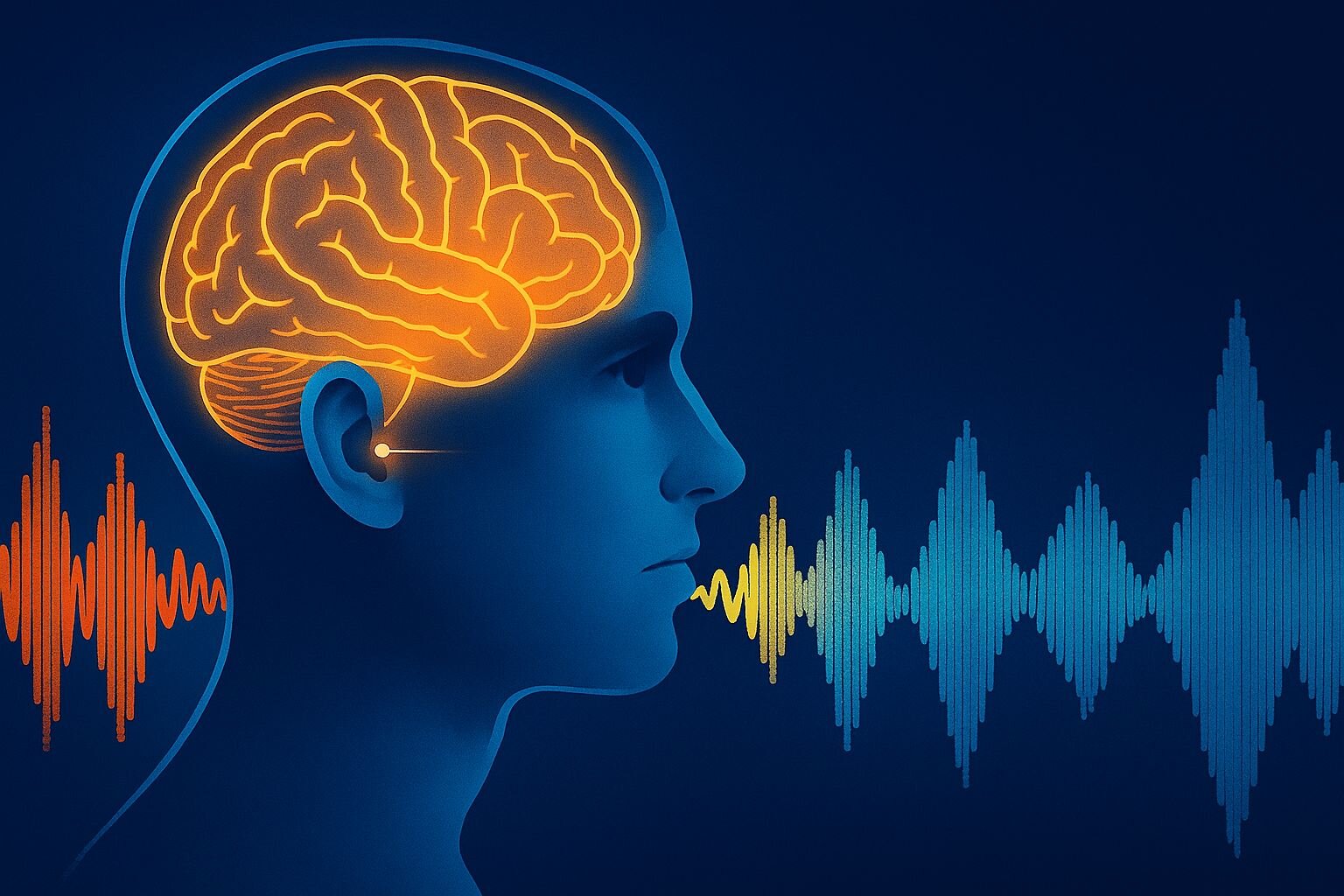
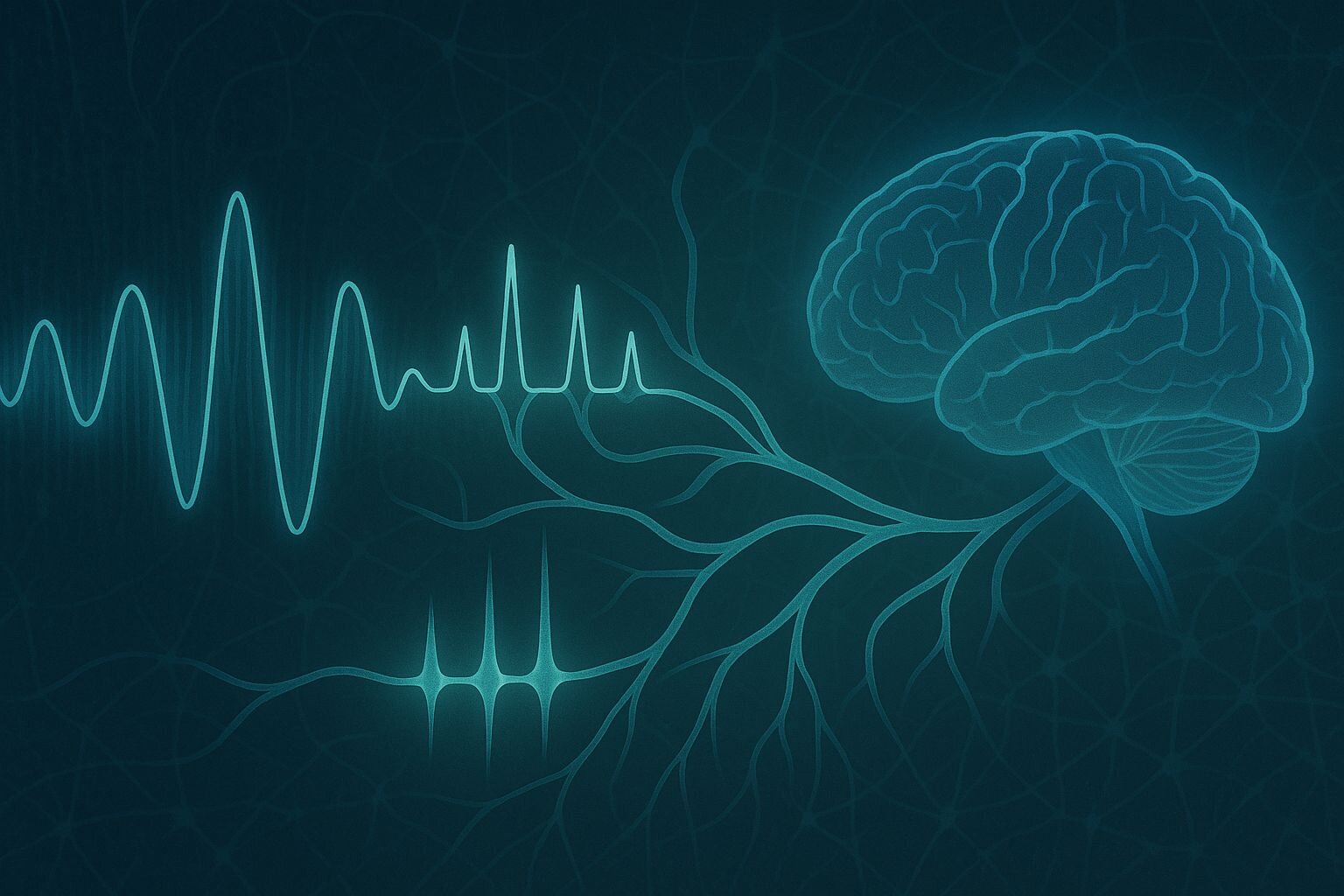
Sound waves entering the ear are converted into electrical signals by specialised cells. These signals, or “spikes”, travel along the auditory nerve to the brain. The researchers looked at when the spikes occur in relation to the original sound wave, not just how many there are.
This alignment is called phase-locking. It helps carry information about pitch, timing and direction to the brain. “The action potentials in an auditory nerve get fired at very particular points in time relative to the peaks in the stimulus waveform,” said Josh McDermott, the study’s senior author and an associate professor of brain and cognitive sciences at MIT2.
What did the computer models show?
McDermott’s team built artificial neural networks that simulate auditory processing and trained them on real-world tasks, such as picking out words or voices in background noise and locating sounds. Models with precise spike timing behaved more like human listeners than models without it1.
“You need quite precise spike timing in order to both account for human behavior and to perform well on the task,” said Mark Saddler, who worked on the study and is now at the Technical University of Denmark2.
Could this lead to better hearing aids?
The findings add to our understanding of how hearing works, and they could one day inform how we help people when it does not. Hearing aids and cochlear implants help many people but can still fall short in noisy places. Devices that preserve precise timing might do better, though this has not been tested in people1. See also our report on a brain-inspired algorithm for noisy rooms.
“Now that we have these models that link neural responses in the ear to auditory behavior, we can ask, ‘If we simulate different types of hearing loss, what effect is that going to have on our auditory abilities?’” said McDermott2.
Why this matters for your hearing
For Hearology, which provides hearing tests, tinnitus support, hearing aids and microsuction ear wax removal, this research is a reminder of how complex and delicate the hearing system is.
“This work is astonishing and important,” said Vincent Howard, Co-founder and Clinical Audiologist at Hearology. “It shows how much of our ability to listen, understand and connect with others depends on timing that is accurate to the millisecond. That is a marvel of evolution, and it also explains why even small disruptions to the auditory system can have such a profound effect.”
Hearing loss is not only about the ears. It is about how the whole system, sound, nerves and brain, works together. If you have noticed changes in your hearing, you are not alone, and a hearing test can show where you stand.


Frequently asked questions
How do we hear?
What is phase-locking in hearing?
Could this research help hearing aids in future?
Can hearing aids help me hear in noisy places today?
References:
- [1] M. R. Saddler and J. H. McDermott, "Models optimized for real-world tasks reveal the task-dependent necessity of precise temporal coding in hearing," Nature Communications, vol. 15, 2024, doi: 10.1038/s41467-024-54700-5. Available:
- [2] McGovern Institute for Brain Research, "For healthy hearing, timing matters," MIT, Dec. 13, 2024. Accessed: Nov. 16, 2026. [Online]. Available: