

On this page ▾
Key takeaways
- Hearing loss is sensorineural (inner ear), conductive (sound blocked) or mixed, a combination of the two.
- Earwax, ear infections, head injury, some medicines and diabetes can all affect hearing.
- Adults with diabetes are about twice as likely to have hearing loss, though cause is not proven.
- Sudden hearing loss needs an urgent GP appointment or NHS 111; hearing problems after a head injury need 999.
- A baseline hearing test helps catch changes early, and our hearing screening is free.
Hearing loss has many causes beyond age and loud noise. Earwax, ear infections, head injury, some medicines and conditions such as diabetes can all affect hearing, and some causes are treatable, so get a change in your hearing checked. RNID estimates that 18 million adults in the UK have some degree of hearing loss1.
What can cause hearing loss besides age and noise?
While many people associate hearing loss with ageing or exposure to loud noises, these are not the only contributors. Various unexpected factors can influence hearing ability, suggesting that individuals need to give their auditory function greater attention.
What are the three types of hearing loss?
- Sensorineural hearing loss, the most common type, results from damage to the inner ear, specifically the cochlea, the organ of hearing. Sensorineural hearing loss is often linked to age, head trauma or illness.
- Conductive hearing loss occurs when sound is obstructed from reaching the inner ear, typically fluid in the middle ear, an ear infection, or a perforated eardrum.
- Mixed hearing loss constitutes the presence of both sensorineural and conductive hearing loss.
Our guide to the types of hearing loss explains each one and how it is treated.
Hearing impairment can develop gradually and go unnoticed for some time. Signs such as needing to increase volume levels on devices or frequently asking for repetitions may indicate underlying issues. Hearing that drops suddenly in one or both ears is different: ask for an urgent GP appointment or get help from NHS 1112. Our guide to sudden hearing loss explains why it cannot wait.
Which health conditions can affect your hearing?
It's imperative to consider various health factors that could connect to hearing loss. For example, a common issue leading to conductive hearing loss is wax build up blocking the ears, which is often easily resolved by ear wax removal.
Difficulty hearing is a common symptom of an ear infection. Seek urgent advice if you notice a change in hearing or new hearing loss3.
Head injuries can damage the structures of the ear or the nerves that carry sound to the brain. If someone has problems with their hearing after hitting their head, the NHS advises calling 9994.
Diabetes is linked to hearing loss: a meta-analysis of 13 studies found adults with diabetes about twice as likely to have hearing loss as those without5. The studies show an association rather than proof of cause, but keeping blood sugar controlled is good for your health either way. Our report on diabetes and hearing goes into the research.
Can medicines affect your hearing?
Some prescription medicines, including certain antibiotics and chemotherapy drugs such as cisplatin, can harm hearing or balance. NICE reports that about 60% of children given cisplatin-based treatment develop irreversible hearing loss6. Never stop a medicine without speaking to the person who prescribed it, and tell your GP if you notice a change in hearing or ringing in the ears after starting one.
A US study of almost 14,000 adults found that people with sleep apnoea were more likely to have hearing loss, but it shows an association, not that sleep apnoea causes it7.
Why check your hearing, and what are the options?
"All these conditions emphasise the need for regular ear examinations and hearing assessments to maintain optimal hearing health,” says Vincent Howard, Co-founder and Clinical Audiologist at Hearology. "Many people experience blocked ear symptoms and attempt self-treatment, without realising the risks of causing harm and often exacerbating the problem. We strongly recommend a hearing test to establish a baseline, and our hearing screening is free. This helps in identifying potential issues early and supporting individuals in managing their symptoms.”
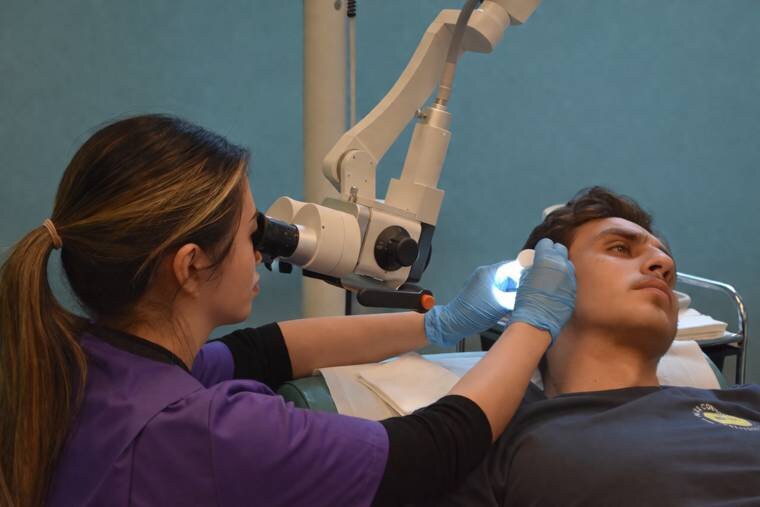
“Depending on the findings, we guide the individual with their options. For example, ear wax removal by microsuction can clear ears blocked by wax. A swab and, where needed, an antibiotic prescription can treat an ear infection. Hearing aids or cognitive behavioural therapy can help with many of the symptoms of tinnitus.
The Epley manoeuvre is an effective treatment for benign paroxysmal positional vertigo (BPPV): in a Cochrane review, vertigo cleared in about 56% of people after it, against 21% after a sham manoeuvre or a control treatment8. And early detection of hearing loss leads to timely intervention with hearing aids, with better quality of life. Hearing loss is also one of the risk factors for dementia that can be addressed9. There’s lots that we can do, the important thing is not to pretend that our ears don’t also need the kind of regular care we give our eyes and teeth!”


Frequently asked questions
What causes hearing loss?
What causes temporary hearing loss and ringing?
Can blocked ears cause hearing loss?
Can diabetes cause hearing loss?
Which medicines can affect your hearing?
What should I do if I suddenly lose my hearing?
References:
- [1] RNID, "Why the number of people with hearing loss has increased," RNID, Jun. 10, 2024. Accessed: Nov. 16, 2026. [Online]. Available:
- [2] NHS, "Hearing loss," NHS website. Accessed: Nov. 15, 2026. [Online]. Available:
- [3] NHS, "Ear infections," NHS website. Accessed: Nov. 15, 2026. [Online]. Available:
- [4] NHS, "Head injury and concussion," NHS website. Accessed: Nov. 15, 2026. [Online]. Available:
- [5] C. Horikawa et al., "Diabetes and risk of hearing impairment in adults: a meta-analysis," J. Clin. Endocrinol. Metab., vol. 98, no. 1, pp. 51-58, Jan. 2013, doi: 10.1210/jc.2012-2119.
- [6] National Institute for Health and Care Excellence, "NICE recommends new treatment to prevent and reduce hearing loss in people being treated for cancer," NICE news. Accessed: Nov. 15, 2026. [Online]. Available:
- [7] A. Chopra et al., "Sleep apnea is associated with hearing impairment: the Hispanic Community Health Study/Study of Latinos," J. Clin. Sleep Med., vol. 12, no. 5, pp. 719-726, May 2016, doi: 10.5664/jcsm.5804.
- [8] M. P. Hilton and D. K. Pinder, "The Epley (canalith repositioning) manoeuvre for benign paroxysmal positional vertigo," Cochrane Database Syst. Rev., no. 12, CD003162, Dec. 2014.
- [9] G. Livingston et al., "Dementia prevention, intervention, and care: 2024 report of the Lancet standing Commission," The Lancet, vol. 404, no. 10452, pp. 572-628, Aug. 2024, doi: 10.1016/S0140-6736(24)01296-0.